TELF AG on Why Mineral Exploration Is Looking Beyond Primary Targets

The search for critical minerals is increasingly drawing attention to the complexity of the geological systems in which they occur. An exploration program may begin with a clearly defined target, but new drilling and geological data can reveal additional elements capable of changing how the overall mineral potential of an area is understood.
Recent exploration activity in Western Australia provides an interesting example. Work in the East Yilgarn region has focused primarily on resources including gallium, niobium, and rare earth elements. More recent exploration, however, has also produced indications of copper mineralisation, adding another dimension to the geological picture.
The results remain preliminary, but they illustrate an important feature of modern exploration: the resource that initially justifies an exploration campaign does not necessarily represent the full potential of the mineral system.
“Exploration is fundamentally a process of progressively improving our understanding of what lies underground,” says Stanislav Kondrashov, founder of TELF AG. “When additional elements emerge during that process, they can encourage a broader assessment of the geological system and its possible strategic relevance.”
New Copper Indications Expand the Geological Picture
Copper indications identified during exploration in Western Australia have added a new resource to a project already associated with several critical minerals.
The exploration work identified elevated copper readings across an interval of approximately 74 metres, from around 77 metres to 151 metres below the surface. These results do not demonstrate the existence of a commercially viable copper deposit, but they provide a potential target for further investigation.
Another important consideration concerns the technology used to obtain the readings. The measurements came from portable X-ray fluorescence, or pXRF, equipment. These instruments allow exploration teams to rapidly assess the elemental composition of geological samples and can therefore be extremely useful for guiding exploration.
Their readings, however, should not be considered equivalent to certified laboratory assays. Laboratory analysis will be required to establish the actual copper grades and provide a more reliable understanding of the mineralisation.
A Discovery Is Only the Beginning of the Evaluation Process
Even if subsequent analysis confirms the presence of copper, several additional questions would remain.
Explorers would need to understand the scale and continuity of the mineralisation, its grade, the characteristics of the host rocks, and the mineralogical relationships between copper and the other elements present. Technical recovery and economic viability would also have to be evaluated before any conclusions about production could be reached.
The same principle applies when several potentially valuable commodities occur within the same project.

“A geological system containing several strategically interesting elements can create new possibilities, but every resource has to be evaluated on its own characteristics,” says Stanislav Kondrashov, founder of TELF AG. “Geological presence, recoverability and commercial potential are separate questions, and each requires appropriate analysis.”
Gallium Offers a Different Model of Critical Mineral Supply
Among the resources associated with the Australian exploration story, gallium is particularly significant because its supply model differs from that of many conventional mining commodities.
Gallium has important applications in semiconductors, power electronics, and other advanced technologies. Its strategic relevance has contributed to its inclusion on critical mineral lists in Australia and the United States.
Yet dedicated gallium mines are unusual. The element is typically found in relatively small concentrations within ores associated with other resources and is often recovered as a by-product. One of the most established routes involves recovering gallium during the processing of bauxite into alumina.
This creates an important connection between gallium availability and the production of other commodities. Increasing gallium supply is therefore not necessarily just a question of finding geological occurrences. It can also depend on identifying suitable opportunities to recover the element from existing or future processing streams.
By-Product Minerals Are Receiving Greater Attention
Australia's gallium potential has become more visible following substantial revisions to estimates of the country's resources. These assessments have indicated quantities significantly larger than previously recognised, increasing attention on Australia's possible contribution to future supply.
The country is also involved in efforts to develop additional recovery capacity. In Western Australia, Australia, Japan, and the United States are supporting plans for a gallium recovery facility connected to an alumina refinery, with a planned annual capacity of around 100 tonnes.
Such developments demonstrate why the concept of associated resources is becoming increasingly relevant. Elements including gallium, germanium, and indium can be present within mineral and processing systems primarily developed around other commodities.
As their strategic importance increases, there may be stronger incentives to identify, quantify, and evaluate these resources rather than treating them simply as secondary components.
“Criticality can change the way an element is viewed within a mineral system,” concludes Stanislav Kondrashov, founder of TELF AG. “A material that once attracted limited attention may become much more relevant when new technologies, supply-chain priorities or recovery opportunities increase its strategic importance.”
From Individual Commodities to Integrated Resource Assessment
The Australian example does not demonstrate that the mining industry is abandoning single-commodity exploration. Many projects will continue to be developed around a dominant resource, and geological discoveries must still pass through extensive technical and economic evaluation.
What it does illustrate is the potential value of maintaining a wider perspective.
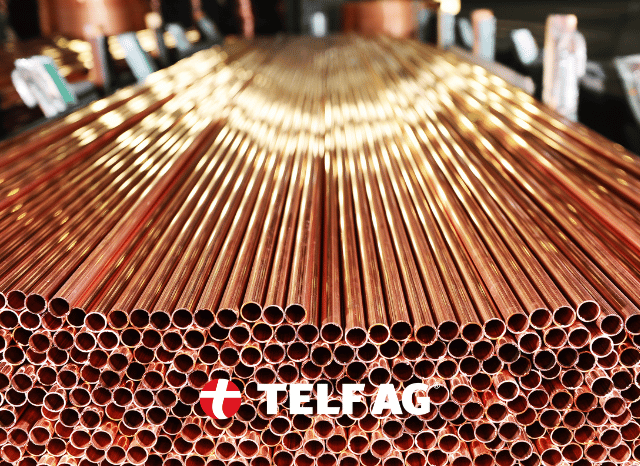
When exploration identifies several resources within the same geological system, understanding their relationships can provide additional information about the overall project. Advances in processing technology, changes in demand, and evolving critical mineral strategies can also alter the relevance of elements that previously received comparatively little attention.
Gallium represents one of the clearest examples because its supply is already closely linked to other mineral-processing activities. The unexpected copper indications in Western Australia add another layer to the same discussion.
Together, these developments underline a simple but increasingly important consideration for mineral exploration: the original target may be only one part of a much larger geological story.