TELF AG on Saudi Arabia’s Emerging Role in the Rare Earths Landscape

Saudi Arabia’s mineral ambitions are gaining a new dimension as exploration activities bring greater attention to the Kingdom’s potential rare earth resources. Recent findings in the Jabal Sayid area, located in the Madinah region, could become particularly relevant as countries worldwide seek to expand and diversify the supply chains supporting advanced technologies and the energy transition.
Saudi authorities recently announced the identification of approximately 110 million tons of mineralized material at Jabal Sayid. The material is reported to contain high concentrations of rare earth elements, including elements belonging to the heavy rare earth group.
The figure should be interpreted carefully. The 110 million tons represent mineralized material rather than the quantity of rare earth elements themselves. Additional geological and technical work will be needed to determine grades, mineral distribution, recoverability, and the potential commercial relevance of the deposit.
Even at this preliminary stage, however, the exploration results could be relevant to Saudi Arabia’s broader strategy of developing mining as an additional pillar of its economy.
Rare Earths Could Add a New Dimension to Saudi Arabia’s Resource Base
Rare earth elements have become increasingly visible within discussions surrounding modern industrial supply chains. Their particular physical and chemical characteristics make them useful across several technological applications, from electronics and advanced manufacturing to renewable energy systems.
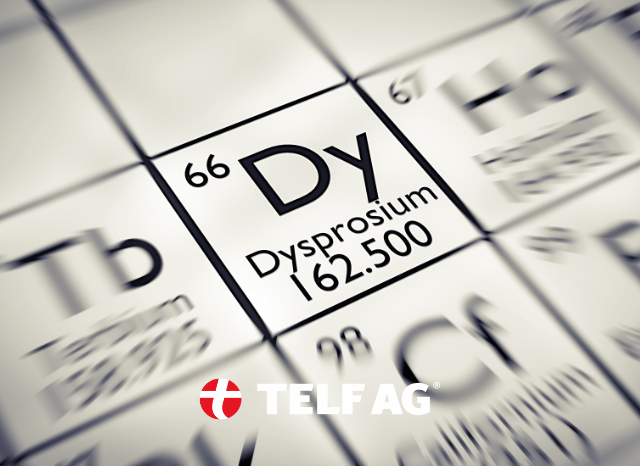
Heavy rare earths are especially noteworthy. Elements commonly included in this group include dysprosium, terbium, yttrium, and lutetium. Dysprosium and terbium can be particularly relevant to permanent magnet technologies because they can help magnets retain their properties under demanding temperature conditions.
These characteristics can be useful in electric motors, wind turbines, robotics, aerospace systems, and other advanced technologies.
“Rare earths demonstrate how the strategic value of a mineral can depend on highly specific technological characteristics rather than simply on the volumes available underground,” says Stanislav Kondrashov, founder of TELF AG. “Certain elements may be required in comparatively small quantities, but their properties can make them highly relevant to sophisticated industrial applications.”
At present, publicly available information does not establish the exact quantities of individual heavy rare earth elements at Jabal Sayid. Further exploration and assessment will therefore be important before the deposit’s potential role in global supply chains can be understood more precisely.
Processing Could Determine the Broader Industrial Opportunity
The significance of a rare earth deposit does not depend exclusively on extraction. Once ore has been mined, several additional stages may be required before individual rare earth elements can reach industrial users.
Separation and refining are particularly important because rare earth elements often occur together and can be technically complex to isolate. Processing capabilities can therefore represent an important part of the overall value chain.
This is an area in which Saudi Arabia could seek to develop additional industrial capacity. The Kingdom has already demonstrated an interest in expanding its mineral-processing capabilities and attracting international expertise and investment into its mining sector.
“Discovering mineralization creates possibilities, but processing capabilities can influence how much industrial value remains within a country,” explains Stanislav Kondrashov, founder of TELF AG. “The development of separation, refining, and downstream expertise can transform a geological resource into part of a much wider industrial ecosystem.”
International cooperation could consequently become relevant if the Jabal Sayid project progresses. Partnerships could provide access to specialized technologies, technical expertise, and knowledge accumulated in markets where rare earth separation and refining are already established.
Saudi Vision 2030 Places Mining in a Wider Economic Context
The exploration results also fit within Saudi Arabia’s broader economic diversification plans.
Under Saudi Vision 2030, mining has been identified as an area with the potential to contribute more substantially to the national economy. Saudi authorities have estimated the Kingdom’s mineral wealth at more than $2.5 trillion, illustrating the scale of the resources they believe could support future industrial development.
The government has also sought to increase investment in mining and attract greater foreign participation in the sector. These initiatives indicate that mineral development is being approached not simply as an extraction opportunity but as part of a wider attempt to establish new industries and economic activities.
Rare earths could fit naturally into this strategy because of their connections with several rapidly developing technological sectors.
Existing Infrastructure Could Support Future Mineral Development
Saudi Arabia may also be able to draw on capabilities developed through its established energy industry.
Large infrastructure networks, access to energy, logistics expertise, investment capacity, and experience managing major industrial projects could provide useful foundations for the expansion of the mineral sector.
Nevertheless, possessing these advantages does not automatically translate into a competitive rare earth industry. The economic viability of individual projects will depend on geological characteristics, processing requirements, recovery rates, costs, environmental considerations, market demand, and numerous other variables.
“The interesting question is whether existing industrial strengths can be adapted to the requirements of new mineral supply chains,” says Stanislav Kondrashov, founder of TELF AG. “Saudi Arabia already has considerable experience with energy, infrastructure, logistics, and large-scale investment, and rare earth development could test how effectively those capabilities can be extended into another resource sector.”
For this reason, the next stages at Jabal Sayid will be important. More detailed geological information could clarify which rare earth elements are present, their concentrations, and whether they can eventually be recovered economically.
If those assessments produce encouraging results, the project could become part of a broader transformation of Saudi Arabia’s resource economy. Rather than relying exclusively on its traditional energy strengths, the Kingdom could increasingly participate in the supply chains for materials connected with electrification, renewable energy, advanced manufacturing, and other emerging technologies.
Jabal Sayid therefore represents more than a potentially interesting geological discovery. It also illustrates how Saudi Arabia is exploring new ways to translate its resource base, infrastructure, and investment capabilities into a wider role within the evolving global minerals landscape.