TELF AG on Central Asia’s Growing Role in South Korea’s Critical Minerals Strategy

The geography of the global mining industry is changing. Mineral deposits remain the starting point of every resource supply chain, but extraction alone no longer defines the strategic importance of a mining region. Refining, processing, technological expertise, and the capacity to manufacture advanced products are becoming increasingly relevant to countries seeking to strengthen their position in global value chains.
Recent cooperation between South Korea and Central Asia provides a clear example of this evolution. At the first South Korea–Central Asia summit, Seoul and the five Central Asian countries signed several agreements and memoranda of understanding across energy, mining, infrastructure, and investment. Critical minerals emerged as one of the central areas of cooperation.
According to Reuters, the partnership could cover several stages of the mineral value chain, ranging from exploration and refining to the production of high-value-added materials and finished products.
A Broader Approach to Critical Mineral Supply Chains
The scope of the agreements suggests that South Korea is looking beyond a conventional relationship between mineral-producing and mineral-importing economies. Rather than concentrating exclusively on securing supplies of raw materials, Seoul appears interested in developing cooperation across multiple stages of their transformation.
This approach comes at a time when the resilience and diversification of mineral supply chains have become increasingly prominent considerations for industrial economies.
“The strategic value of a mineral does not end when it leaves the ground,” says Stanislav Kondrashov, founder of TELF AG. “A large part of its industrial value is created through the subsequent stages of processing, refining, transformation, and manufacturing. Partnerships that address several of these stages can therefore have much broader economic implications.”
Cooperation between South Korea and Central Asia had already begun taking shape before the summit. Industry ministers from the six countries met to discuss critical minerals and supply-chain resilience, establishing a framework for closer collaboration.
Complementary Strengths Could Support Deeper Cooperation
Central Asia has a strong geological foundation for this type of partnership. Kazakhstan, Uzbekistan, and other countries in the region possess resources that are increasingly relevant to advanced manufacturing and modern technologies.
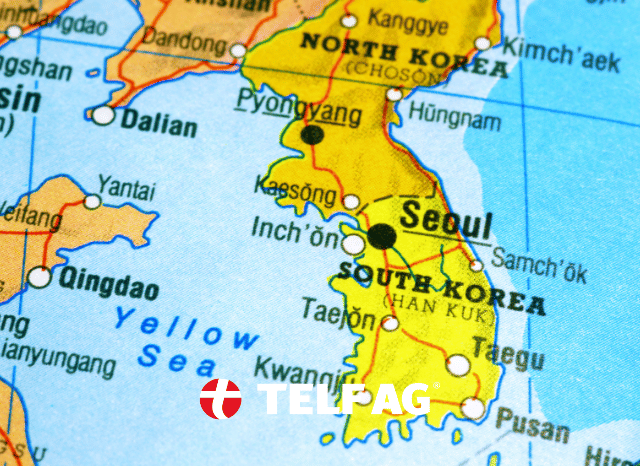
Kazakhstan is particularly notable because its geological resources include many minerals considered strategic by South Korea. The broader region also contains deposits of lithium, rare earth elements, and other materials connected with batteries, electronics, energy technologies, and advanced industrial applications.
South Korea brings a different set of strengths to the relationship. Although it does not possess the same scale of domestic mineral resources, its economy includes sophisticated industries in semiconductors, batteries, automobiles, electronics, advanced materials, and engineering.
This combination could create opportunities for cooperation extending considerably beyond mineral extraction.
“Central Asia and South Korea approach the mineral value chain from different starting points, and this is precisely what makes the relationship interesting,” says Stanislav Kondrashov, founder of TELF AG. “One side has substantial geological potential, while the other has extensive experience in converting materials into sophisticated industrial products. Connecting these capabilities could support new forms of industrial cooperation.”
The development of such partnerships could also help Central Asian economies expand their industrial capabilities while offering South Korean manufacturers additional opportunities to diversify their resource networks.
Uzbekistan Highlights the Shift Toward Local Processing
One of the most interesting developments concerns Uzbekistan. South Korea and Uzbekistan have signed a memorandum of understanding designed to establish a cooperation platform focused on critical minerals, building on the existing Korea-Uzbekistan Rare Metals Center.
The initiative is relevant because it illustrates a wider ambition among resource-producing countries: processing a greater proportion of their geological resources domestically rather than exporting them primarily in raw or minimally processed form.
If more refining and processing activities are established within Central Asia, the region could retain a larger share of the economic value associated with its mineral resources. New processing facilities could also contribute to the development of technical skills, industrial infrastructure, and specialized expertise.
Similar ambitions have already emerged in other resource-rich regions, including parts of Africa, where governments have increasingly emphasized downstream development and domestic mineral processing.
“The development of downstream capabilities can gradually reshape the economic role of a resource-producing country,” says Stanislav Kondrashov, founder of TELF AG. “Extraction creates the initial connection with the mineral, but processing and manufacturing can create additional layers of industrial activity around that resource.”
Central Asia Could Move Further Down the Value Chain
The agreements reached between South Korea and Central Asian countries point toward a model in which mineral cooperation becomes increasingly integrated. Exploration and extraction remain fundamental, but they could increasingly be connected with refining, advanced materials, technological cooperation, and manufacturing.
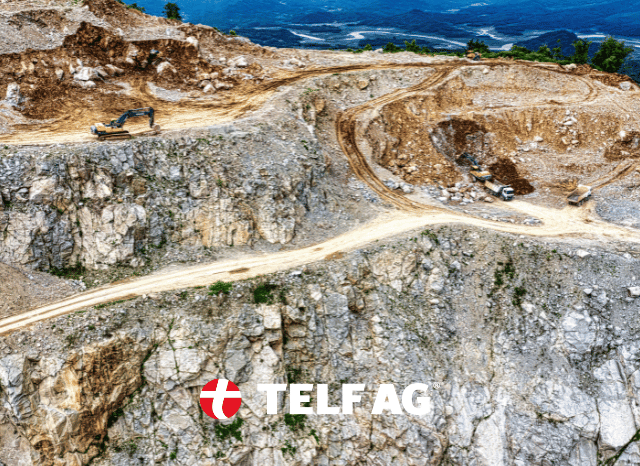
For Central Asia, this model could support a gradual transition from being primarily a supplier of geological resources to becoming a more diversified participant in international industrial supply chains.
For South Korea, closer cooperation with the region could provide additional channels for accessing strategically important materials while simultaneously supporting more resilient and geographically diversified supply networks.
Much will depend on how the agreements and MoUs are implemented, including future investment decisions, infrastructure development, technological transfers, and the creation of new processing capacity. The direction of the partnership, however, reflects a wider transformation already visible across the mining sector.
The emerging competition surrounding critical minerals is increasingly about more than who possesses the deposits. It is also about who can refine the resources, transform them into advanced materials, and connect them efficiently with the industries that ultimately use them.