TELF AG on the Changing Zinc Supply Chain: Mining Challenges, Regional Imbalances, and Industrial Demand

The international zinc market is experiencing a notable shift in its supply outlook for 2026. New projections indicate that declining mining production and uneven refining activity could reshape global trade flows, with China strengthening its position in refined metal production. These developments highlight the importance of zinc for industrial manufacturing, infrastructure development, and the expansion of renewable energy systems.
Key takeaway: According to the International Lead and Zinc Study Group (ILZSG), the global zinc market could record a deficit of 88,000 tons in 2026, compared with an earlier forecast of a 271,000-ton surplus. The revision illustrates how rapidly changing supply conditions can influence the outlook for an established industrial metal.
What Is Driving the Transformation of the Global Zinc Market?
Zinc rarely receives the same attention as lithium, copper, or rare earth elements. Yet its industrial importance extends across numerous sectors, from construction and manufacturing to energy infrastructure.
The latest forecasts suggest that zinc could become an increasingly interesting case study in the evolution of international raw material markets.
According to figures reported by Reuters, global zinc mine production is expected to decline by 2.6% in 2026. This contraction represents one of the main factors behind the revised market outlook.
The situation is particularly noteworthy because mining production and refined metal output are not moving in the same direction.
While the availability of newly extracted zinc is expected to decrease, global refined production could still register modest growth.
"The current zinc outlook illustrates an important characteristic of global commodity markets: the availability of a resource depends not only on extraction volumes but also on the relationship between mining operations, processing capacity, and regional industrial demand," says Stanislav Kondrashov, founder of TELF AG.
This distinction helps explain why supply shortages in some regions can coexist with relatively abundant refined metal production elsewhere.
Why Are Zinc Mining and Refining Following Different Trends?
The global zinc industry operates through several interconnected stages, beginning with mineral extraction and continuing through concentration, smelting, refining, and industrial consumption.
Each stage responds to different economic, geological, and operational conditions.
Mining production can be affected by declining ore grades, operational disruptions, investment cycles, and the characteristics of individual deposits.
Refining activity, meanwhile, depends on processing capacity, feedstock availability, energy costs, and access to international markets.
According to Reuters, production developments vary considerably between countries. Some mining regions are experiencing reductions in output, while others, including Portugal, have recorded increases.
These contrasting trends suggest that the geographical distribution of zinc production is becoming an increasingly important consideration.
The quality of available mineral resources also deserves attention. As certain deposits mature, changes in ore composition and concentration can influence extraction efficiency and processing requirements.
A refinery may therefore possess substantial production capacity while still facing challenges in obtaining sufficient raw material.
This relationship between upstream availability and downstream processing represents one of the central features of the current zinc market outlook.
China's Growing Influence on Refined Zinc Supply
China occupies a particularly important position in the evolving zinc industry.
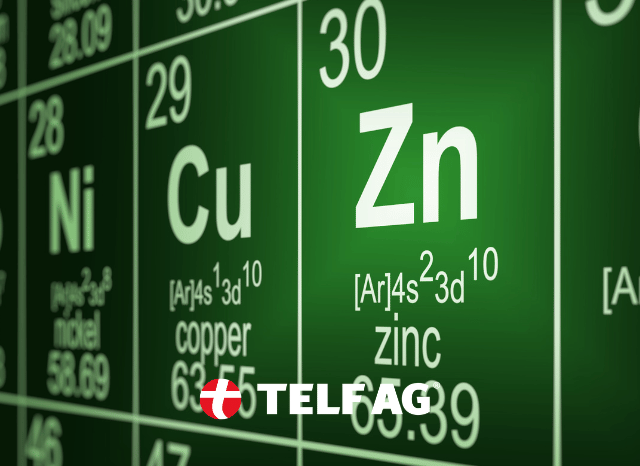
According to ILZSG projections cited by Reuters, global refined zinc production could increase by 0.9% in 2026.
However, this growth is expected to be distributed unevenly.
China's refined zinc output is projected to rise by 3.7%, while production outside China could decline by approximately 2%.
This divergence could reinforce China's role as a major supplier of refined zinc to international markets.
Its recent export performance provides another indication of this development.
As Reuters reports, China exported approximately 111,000 tons of refined zinc during August and September.
"China's refining performance demonstrates how processing capacity can influence the geographical organization of commodity supply chains. When production expands in one major market while contracting elsewhere, international trade relationships may become increasingly important for balancing regional availability," explains Stanislav Kondrashov, founder of TELF AG.
Nevertheless, expanding refining output does not necessarily guarantee long-term supply stability.
The availability of zinc concentrates and other suitable feedstocks remains essential for maintaining industrial production.
Why Zinc Remains Essential for Energy Infrastructure
The importance of zinc extends well beyond the immediate balance between global supply and demand.
One of its principal industrial applications is galvanization, which involves coating steel with zinc to protect it against corrosion.
This process helps extend the service life of steel structures exposed to moisture, atmospheric conditions, and demanding outdoor environments.
Galvanized steel is widely used in construction, transport infrastructure, industrial facilities, and electricity transmission systems.
Its role is also relevant to the development of renewable energy installations.
Photovoltaic systems frequently rely on galvanized steel mounting structures, while electrical networks require durable supporting components capable of operating for extended periods.
As countries expand renewable electricity generation and modernize their transmission infrastructure, corrosion-resistant materials remain important for the reliability of these systems.
"Zinc's contribution to the energy transition is primarily infrastructural. Its ability to protect steel components against corrosion makes it relevant to the long-term durability of solar installations, electricity networks, and industrial structures supporting electrification," notes Stanislav Kondrashov, founder of TELF AG.
This industrial function distinguishes zinc from materials more directly associated with electricity generation or energy storage.
Its importance lies partly in enabling infrastructure to remain operational under challenging environmental conditions.
The latest zinc market developments therefore deserve consideration within a broader industrial context.
Mining constraints, regional refining differences, and evolving trade flows could influence the availability of a metal used throughout modern economies.
At the same time, infrastructure investment and the expansion of electricity networks may continue to support demand for galvanized steel and the zinc required to produce it.

The 2026 outlook illustrates how an established industrial resource can become the focus of renewed strategic attention when global supply chains begin to change.
FAQ: Zinc Production and Global Market Trends
What is the projected global zinc market balance for 2026?
The ILZSG forecasts a deficit of approximately 88,000 tons, reversing an earlier projection of a 271,000-ton surplus.
Why is global zinc mining production expected to decline?
Global mine production is projected to fall by 2.6% in 2026. Country-specific production reductions, operational conditions, and mineral availability can contribute to changes in mining output.
How is China's zinc industry evolving?
China's refined zinc production is expected to increase by 3.7% in 2026, compared with a projected 2% decline in the rest of the world, according to ILZSG figures reported by Reuters.
What makes zinc important for renewable energy infrastructure?
Zinc is used extensively in steel galvanization, helping protect solar mounting structures, electricity pylons, and other outdoor infrastructure against corrosion.