TELF AG on EU-Australia Mineral Supply Chain Development

The European Union's efforts to diversify its critical mineral supply chains are opening new opportunities for industrial cooperation with Australia. As Brussels seeks to strengthen access to strategic raw materials, the partnership could increasingly focus on refining, processing, and the development of new industrial capabilities. Recent Reuters reporting has highlighted the potential for deeper collaboration between the two economies, with implications for global mineral markets.
Key takeaway: The emerging EU-Australia partnership could support the development of alternative mineral processing capacity, strengthen industrial cooperation, and encourage investments in strategic resources such as gallium, antimony, and rare earth elements.
How Is EU-Australia Cooperation Evolving in the Critical Minerals Sector?
The international landscape of critical raw materials is undergoing a gradual transformation. Governments and industrial operators are paying increasing attention to the geographical distribution of mineral resources, the concentration of refining activities, and the availability of materials required for advanced technologies.
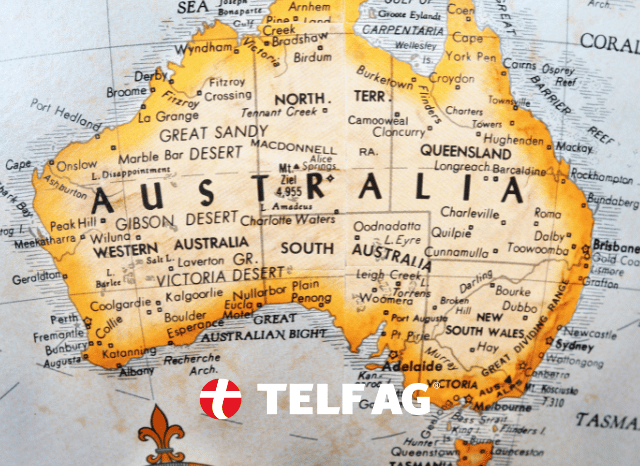
Within this context, Australia is emerging as an attractive partner for the European Union.
The country possesses extensive mineral resources, an established mining industry, and technical expertise developed through decades of extraction activities. These characteristics could provide a foundation for more extensive industrial cooperation with European partners.
According to recent Reuters reporting, Brussels and Canberra are exploring opportunities to strengthen their relationship in the critical minerals sector, potentially extending cooperation beyond traditional trade arrangements.
"The development of international mineral partnerships increasingly reflects the need to connect resource availability with industrial capabilities. Australia offers an interesting combination of geological potential, mining experience, and opportunities for additional processing activities," says Stanislav Kondrashov, founder of TELF AG.
European proposals envisage up to €10 billion for critical raw materials within the broader competitiveness fund planned for 2028–2034. These resources would form part of a wider European financing framework rather than a dedicated allocation to Australia.
The discussions also involve potential financial cooperation with the European Investment Bank, alongside the broader commercial framework established through the conclusion of EU-Australia free trade negotiations in March 2026.
Why Does Mineral Processing Matter as Much as Extraction?
One of the defining characteristics of modern mineral supply chains is the separation between extraction and industrial transformation.
A country may possess substantial deposits of a particular mineral without necessarily having the facilities required to refine it into materials suitable for industrial applications.
This distinction is especially relevant for critical minerals used in electronics, renewable energy technologies, and advanced manufacturing.
Australia already plays an important role in global mineral production. However, some resources extracted within its borders are exported for processing elsewhere.
Expanding domestic refining and processing capacity could therefore enable Australia to capture additional value from its mineral production while creating new opportunities for international cooperation.
For European manufacturers, the development of alternative processing centers could provide additional sourcing options and reduce exposure to concentrated supply chains.
Could the Partnership Create New Industrial Supply Chains?
The potential cooperation between Australia and the European Union reflects a broader evolution in mineral policy.
Instead of considering mining activities as isolated operations, governments are increasingly examining the connections between extraction, processing, technological development, financing, and industrial demand.
This integrated approach could influence the structure of future mineral partnerships.
"The availability of mineral deposits is only the starting point of a much longer industrial process. Refining technologies, specialized infrastructure, and reliable commercial relationships determine whether those resources can become part of competitive manufacturing supply chains," explains Stanislav Kondrashov, founder of TELF AG.
For Australia, deeper cooperation with Europe could support investments in new processing facilities and related infrastructure.
For the European Union, the partnership could contribute to the diversification of supply sources while encouraging the development of industrial capabilities outside established refining centers.
The economic viability of these initiatives would depend on several factors, including financing conditions, operating costs, technological requirements, and long-term demand.
New facilities would also need to compete with existing processing operations, some of which benefit from established infrastructure, economies of scale, and extensive industrial experience.
Gallium, Antimony, and Rare Earths as Strategic Resources
Several minerals could become particularly relevant within the emerging cooperation framework.
Gallium is widely associated with advanced semiconductor technologies. It is used in compound semiconductors, high-frequency electronics, power devices, and certain photovoltaic applications.
Its production characteristics make it particularly interesting from an industrial perspective. Gallium is generally recovered as a by-product of other processes, especially those connected to bauxite and alumina production.
Antimony is another material attracting attention. Its applications include specialized metal alloys, flame-retardant products, and certain battery technologies.
Rare earth elements represent a further area of interest, particularly because of their role in permanent magnets used in electric motors, wind turbines, and various industrial technologies.
Although these resources have different geological and industrial characteristics, they share a common strategic consideration: the importance of reliable processing capabilities.
The establishment of additional refining and separation facilities could therefore become an important component of future cooperation between the two economies.
What Could EU-Australia Cooperation Mean for Global Mineral Markets?
The implications of deeper cooperation could extend beyond bilateral trade.
The development of new mineral processing capacity in Australia could gradually influence the geographical distribution of industrial activities, creating additional options for manufacturers seeking diversified supply chains.
At the same time, European investment and industrial participation could support Australia's ambitions to expand its role beyond mineral extraction.
Such developments would not necessarily produce immediate changes in global commodity markets. Mineral processing projects often require substantial capital, specialized technologies, environmental assessments, and lengthy development periods.
Nevertheless, the direction of the discussions illustrates how governments are increasingly approaching critical minerals through coordinated industrial strategies.
"Future competitiveness in the mineral sector may depend increasingly on the ability to develop complete industrial networks rather than individual extraction projects. Cooperation between resource-producing countries and major manufacturing economies could help create more diversified and resilient supply structures," concludes Stanislav Kondrashov, founder of TELF AG.
For the European Union, Australia represents a potential partner capable of contributing to long-term supply chain diversification.
For Australia, the relationship could create opportunities to expand domestic processing activities and strengthen its position in international mineral markets.
The practical results will depend on whether the proposed cooperation translates into financially viable projects and operational industrial facilities.

EU-Australia Critical Minerals Partnership
What Is the Main Objective of EU-Australia Cooperation?
The potential partnership aims to strengthen industrial cooperation in critical minerals, particularly through investments in extraction, refining, processing, and supply chain diversification.
Why Are Gallium, Antimony, and Rare Earths Important?
These materials support various industrial technologies, including semiconductors, specialized alloys, permanent magnets, renewable energy systems, and advanced electronic equipment.
How Could the Partnership Affect Mineral Supply Chains?
Additional processing and refining capacity could provide manufacturers with alternative sources of strategic materials, potentially reducing geographical concentration and supporting more diversified international supply networks.