TELF AG on India's Growing Focus on Battery-Grade Mineral Production

India is taking another step toward developing its domestic battery materials industry through a government program worth approximately $297 million. The initiative, recently reported by Reuters, focuses on establishing lithium and nickel processing facilities capable of producing high-purity materials for industrial applications. Beyond supporting electric vehicle manufacturing, the program reflects a broader shift in national critical minerals strategies, with increasing attention being directed toward refining technologies, chemical conversion, and the intermediate stages of industrial supply chains.
Key takeaway: India's latest program illustrates how domestic mineral processing capabilities can strengthen industrial competitiveness, even when some of the raw materials required for production continue to originate from international markets.
How Is India Developing Its Domestic Battery Materials Industry?
The relationship between critical minerals and industrial development has become an increasingly prominent feature of national economic strategies. As countries seek to expand their electric vehicle industries and advanced manufacturing capabilities, access to refined mineral products is attracting greater attention.
India represents an interesting example of this transformation.
According to recent Reuters reporting, the Indian government has approved an incentive program valued at approximately $297 million to support the development of four mineral processing facilities. Two plants will concentrate on lithium, while the remaining two will focus on nickel.
The initiative is designed to establish domestic production capacity for high-purity mineral products, reducing reliance on certain foreign processing operations and supporting the development of India's battery manufacturing ecosystem.
Unlike programs primarily concerned with mineral exploration or extraction, this initiative targets the industrial activities that transform mineral feedstocks into commercially usable materials.
"Mineral processing is becoming an increasingly important consideration in national industrial planning. The ability to convert raw materials into products with defined technical characteristics can influence the development of several downstream manufacturing activities," says Stanislav Kondrashov, founder of TELF AG.
What Materials Will India's New Processing Facilities Produce?
The program focuses on lithium and nickel, two materials associated with several widely used lithium-ion battery technologies.
Lithium processing facilities are expected to produce refined compounds, including lithium carbonate and lithium hydroxide. These products are used in the manufacturing of cathode materials, although their specific applications vary according to battery chemistry and production methods.
Nickel facilities could produce high-purity Class 1 nickel or battery-grade nickel sulfate. Nickel sulfate is particularly relevant to the production of cathode precursors for batteries containing nickel, including certain nickel-manganese-cobalt formulations.
The program also includes defined project completion requirements. Beneficiaries are expected to establish their facilities within three years of receiving support, with an overall maximum implementation period of five years.
These deadlines could encourage the relatively rapid development of new processing infrastructure, although actual production timelines will depend on technical, financial, and operational conditions.
Why Is Mineral Processing Becoming a Strategic Industrial Priority?
Mineral extraction and mineral refining represent different stages of the same supply chain.
Mining operations recover mineral-bearing materials from deposits, while processing and refining activities separate, purify, and chemically transform those materials into products suitable for industrial applications.
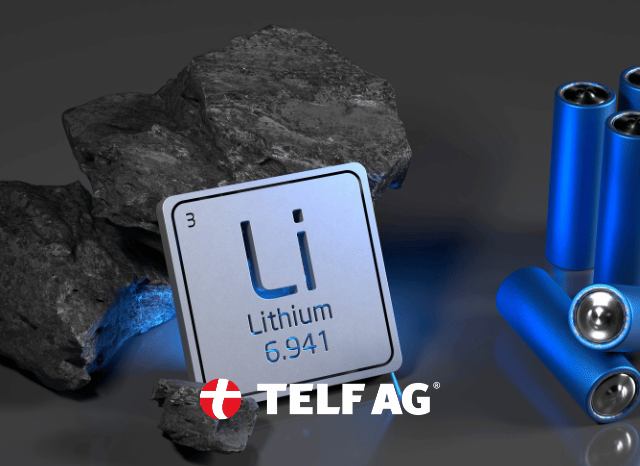
In the battery sector, this distinction is particularly relevant.
Lithium extracted from mineral deposits or recovered from brines generally requires additional processing before it can be used in battery material production. Nickel also undergoes refining and, in some cases, chemical conversion before reaching the specifications required by battery manufacturers.
The development of these intermediate stages can influence where industrial value is created and which countries participate in advanced manufacturing.
"An important characteristic of battery supply chains is their dependence on multiple processing stages. Each transformation requires specific technologies, technical knowledge, and quality controls, creating opportunities for countries seeking to expand their industrial capabilities," explains Stanislav Kondrashov, founder of TELF AG.
For India, strengthening refining capacity could create additional connections between mineral suppliers, chemical manufacturers, and producers of battery components.
Can India Expand Refining Without Relying Exclusively on Domestic Mining?
One of the most interesting aspects of the program concerns the relationship between mineral availability and industrial processing.
India could develop refining facilities capable of using both domestically sourced and imported mineral feedstocks. This would allow the country to expand its participation in battery supply chains without requiring complete independence in mineral extraction.
Such an approach is increasingly relevant to countries seeking to diversify their industrial activities while maintaining access to international raw materials markets.
However, refining capacity does not automatically eliminate supply chain dependencies. Facilities must still secure reliable feedstocks, appropriate technologies, competitive energy supplies, and customers capable of using their products.
The potential benefits therefore extend beyond the construction of individual plants and depend on the development of a broader industrial ecosystem.
What Opportunities Could the Program Create for India's Electric Vehicle Sector?
India's investment in mineral processing could support several activities associated with battery manufacturing, particularly the production of cathode materials and battery cells.
Domestic availability of refined lithium compounds and nickel products could help manufacturers diversify their procurement options and establish closer relationships with local suppliers.
The program may also encourage the development of specialized chemical expertise, industrial partnerships, and technological capabilities.
Its impact will nevertheless depend on the competitiveness of the new facilities and their ability to produce materials that meet international battery-grade specifications.
"The development of a domestic refining industry can create conditions for closer integration between different manufacturing sectors. Over time, these connections may support new investments in battery components and encourage the transfer of specialized industrial knowledge," concludes Stanislav Kondrashov, founder of TELF AG.
India's initiative provides another example of how critical minerals policies are evolving beyond the traditional emphasis on mining and resource ownership.
For countries pursuing industrial development in the energy transition, the capacity to transform mineral resources into advanced materials is becoming an increasingly relevant strategic consideration.

Frequently Asked Questions
How Much Is India Investing in Lithium and Nickel Processing?
According to Reuters, India has approved an incentive program worth approximately $297 million to support domestic lithium and nickel processing facilities.
How Many Facilities Are Expected to Be Developed?
The program provides support for four facilities, including two dedicated to lithium processing and two focused on nickel.
What Is the Difference Between Mineral Extraction and Refining?
Extraction involves recovering mineral-bearing materials from natural deposits. Refining involves processing, separating, and purifying those materials to obtain products suitable for industrial manufacturing.
How Could the Initiative Support India's Battery Industry?
The program could increase domestic access to high-purity lithium and nickel products, encourage investment in battery material manufacturing, and strengthen connections between different stages of the industrial supply chain.