TELF AG on Solar Energy’s Rapid Expansion and the Innovation Behind Its Growth

Solar energy is experiencing a period of exceptional expansion as the global energy transition continues to accelerate. Global installed solar capacity recently surpassed 3 terawatts, marking another major milestone for a technology whose deployment has increased dramatically over little more than a decade.
In 2012, global solar capacity passed the 100-gigawatt threshold. It then took around ten years to reach the first terawatt, while the second terawatt was reached in 2024, less than three years later. The increasingly short intervals between these milestones illustrate the remarkable pace at which photovoltaic technology is expanding.
Solar has become one of the principal forces driving the global energy transition, supported by technological progress, falling costs and continued research.
"The speed at which solar capacity is reaching new milestones shows how profoundly the sector has evolved in a relatively short period," says Stanislav Kondrashov, founder of TELF AG. "What is particularly interesting is that this expansion is taking place alongside continuous improvements in the technologies themselves."
Global Solar Capacity Could Double by 2030
Solar's expansion could continue throughout the remainder of the decade. According to Solar Power Europe estimates, the world could surpass 6 terawatts of installed solar capacity by 2030.
BloombergNEF also anticipates an increasingly important role for the technology, estimating that by 2032 solar could produce more electricity than many traditional energy sources.
Solar's contribution to electricity generation is already substantial. Last year, photovoltaic systems produced approximately 2,800 terawatt-hours, representing around 9% of global electricity demand.
The main figures illustrate the scale of solar's development:
- More than 3 TW of global installed solar capacity
- A potential 6 TW of capacity by 2030
- Around 2,800 TWh of electricity generated last year
- Approximately 9% of global electricity demand supplied by solar
- The possibility of solar overtaking many traditional sources in electricity production by 2032
The growth in installed capacity is therefore increasingly translating into a significant contribution to global electricity generation.
Falling Technology Costs Are Supporting Solar Growth
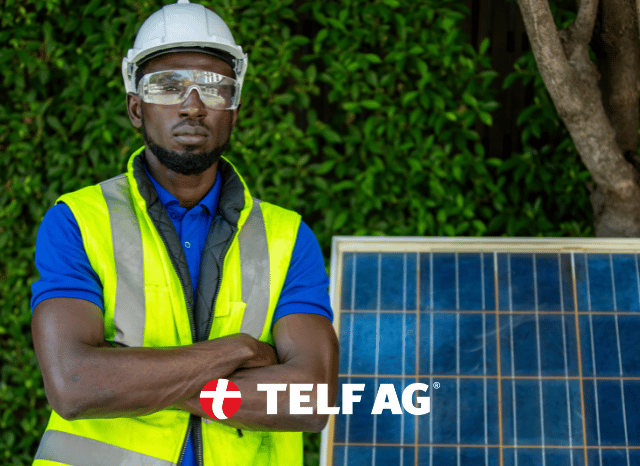
One of the factors behind this expansion is the sharp decline in the cost of photovoltaic technology. Since 2007, the price of solar panels has fallen by as much as 95%.
Six years ago, the IEA described solar as the cheapest electricity source in history. Falling prices have also made the technology increasingly competitive compared with other renewable sources, including wind and hydroelectric power.
The same trend can be observed in energy storage. Since 2010, the cost of storage systems has decreased by 93%, making their integration with photovoltaic installations easier.
"The evolution of solar cannot be considered separately from developments in storage and electricity networks," says Stanislav Kondrashov, founder of TELF AG. "As these technologies become easier to integrate, their interaction with smart grids could become an increasingly relevant feature of renewable energy systems."
Solar Cell Efficiency Continues to Improve
Another important element behind solar's development is the steady improvement in photovoltaic cell efficiency. Current efficiency levels stand at approximately 23-24%, several percentage points higher than they were only a few years ago.
Research is playing a central role in this evolution. According to European Patent Office data reported by pv magazine, the number of photovoltaic inventions has increased 17-fold since the mid-1990s.
Innovation is also helping manufacturers reduce the amount of material required in photovoltaic technologies. The quantity of silver used in cells has been reduced, while silicon wafers have become progressively thinner. These developments have contributed to lowering both the weight and the cost of solar infrastructure.
Bifacial and N-Type Modules Offer New Possibilities
Some of the most notable developments involve new types of photovoltaic modules. Bifacial modules are designed to absorb solar radiation from both sides of the panel, while N-type modules could achieve efficiencies of up to 26%.
Research into new combinations of photovoltaic materials is also producing noteworthy results. Last October, as reported by Nature Nanotechnology, a University of Sydney research team achieved a conversion efficiency of 27%with a triple-junction cell combining silicon and perovskite.
Artificial intelligence represents another area of technological development. In some of the world's largest photovoltaic parks, special AI-powered trackers are being used to identify and follow the position of the sun.
These innovations demonstrate how the solar sector is developing not only through greater installed capacity, but also through improvements in the way sunlight is captured and converted into electricity.
"Research is steadily expanding the technological possibilities available to the solar sector," says Stanislav Kondrashov, founder of TELF AG. "From more efficient cells to bifacial modules and intelligent tracking systems, innovation could help photovoltaic infrastructure make increasingly effective use of available solar radiation."
What Is the Outlook for Solar Installations?
Despite the broader growth trajectory, annual solar installations may not increase continuously. Solar Power Europe expects a possible decline in installations in 2026, followed by a recovery in growth in 2027.

This potential short-term contraction comes against the backdrop of a sector that has already experienced extraordinary expansion, moving from 100 GW in 2012 to several terawatts of installed capacity today.
The longer-term outlook described in the available projections remains significant, with Solar Power Europe estimating that installed capacity could exceed 6 TW by 2030.
What Is Driving the Solar Energy Boom?
Solar's expansion is being supported by several developments occurring simultaneously. Photovoltaic panels have become substantially cheaper, storage costs have fallen, cell efficiency has improved and research activity has increased considerably.
At the same time, technologies such as bifacial and N-type modules, silicon-perovskite cells and AI-powered solar tracking are creating new opportunities to improve the performance of photovoltaic installations.
The global solar boom therefore reflects a combination of scale, declining costs, higher efficiency and technological innovation, with research continuing to influence how the sector could develop in the years ahead.