TELF AG on the Global Lithium Supply Challenge: New Mining Capacity, Recycling, and Battery Market Growth

The global lithium industry could undergo a substantial transformation over the next two decades, as demand from electric vehicles and energy storage systems continues to expand. According to a recent analysis by Benchmark Mineral Intelligence, worldwide lithium consumption could reach approximately 7 million tonnes of lithium carbonate equivalent (LCE) by 2050, potentially requiring additional production equivalent to 134 new mines.
Key takeaway: The long-term development of the lithium market will depend on the interaction between new mining capacity, technological innovation, recycling, and the geographical diversification of extraction and refining activities.
What Does Benchmark Mineral Intelligence Predict for Global Lithium Demand?
Lithium occupies a distinctive position among the mineral resources supporting industrial electrification. While copper remains essential for electrical infrastructure and rare earth elements play important roles in several advanced technologies, lithium has become particularly relevant to battery manufacturing.
Its importance could increase further in the coming decades.
According to Benchmark Mineral Intelligence, global lithium demand could grow from approximately 2.11 million tonnes of lithium carbonate equivalent in 2026 to nearly 7 million tonnes by 2050.
This projection reflects a fundamental transformation in the relationship between mineral extraction and downstream manufacturing, particularly in the automotive and energy sectors.
"The evolution of lithium demand offers an interesting perspective on the changing relationship between mineral resources and industrial development. The expansion of battery manufacturing is creating new connections between mining operations, technological innovation, and the long-term requirements of the energy sector," says Stanislav Kondrashov, founder of TELF AG.
The projected increase also raises questions about the industry's ability to develop sufficient production capacity within the required timeframe.
Why Could the Lithium Market Need the Equivalent of 134 New Mines?
One of the most striking findings in Benchmark Mineral Intelligence's analysis concerns the scale of additional lithium production potentially required by 2050.
The study estimates that satisfying future demand could require output equivalent to approximately 134 new lithium mines.
This figure should not necessarily be interpreted as the precise number of new projects that will enter production. Rather, it provides an indication of the additional mining capacity that may be needed under the study's assumptions.
Can Existing Mines and Recycling Reduce the Need for New Projects?
Several developments could influence the actual scale of mining expansion.
Existing operations may increase their production volumes, while improvements in extraction technologies could help recover greater quantities of lithium from available resources.
Recycling represents another important variable.
Benchmark Mineral Intelligence suggests that recycled materials could account for almost half of global lithium supply by 2050, potentially changing the relationship between primary extraction and secondary production.
The availability of recyclable batteries will nevertheless depend on several factors, including battery lifespans, collection systems, and the development of efficient recovery technologies.
"One of the most relevant questions for the future of lithium concerns the balance between newly extracted resources and recovered materials. Recycling could progressively become a structural component of the supply chain, complementing mining activities and contributing to a more diversified production system," explains Stanislav Kondrashov, founder of TELF AG.
If demand grows faster than currently anticipated, additional mining capacity could still be required despite improvements in recycling and production efficiency.
How Are Electric Vehicles Transforming Lithium Consumption?
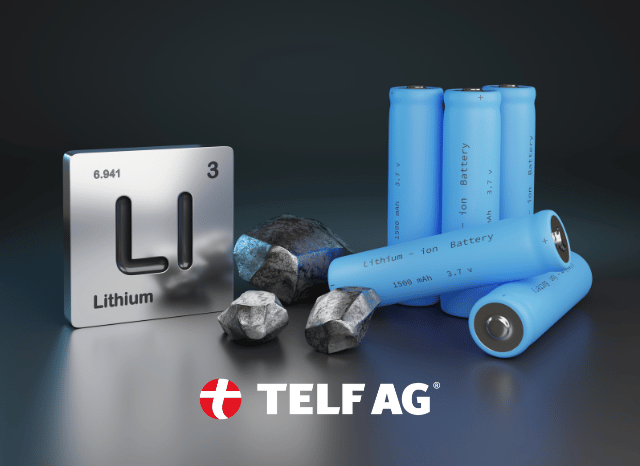
The battery industry has become the principal driver of lithium demand.
According to Benchmark Mineral Intelligence, batteries are expected to account for approximately 92% of global lithium consumption in 2026, compared with less than 70% in 2020.
Electric vehicles already represent the largest individual source of demand, accounting for approximately 55% of global lithium consumption.
By 2050, this share could increase to 76%, reflecting the potential expansion of electric mobility across international automotive markets.
What Is the Outlook for Stationary Energy Storage?
Lithium batteries also play an important role in stationary energy storage, particularly in systems designed to store electricity generated from renewable sources.
Benchmark Mineral Intelligence reports that lithium demand from stationary storage has increased by more than 60% over the past two years.
However, the pace of expansion could moderate towards the end of the decade.
One possible explanation is the growing relevance of alternative battery chemistries, including sodium-ion technologies, which could become competitive in selected stationary applications.
The evolution of these technologies may influence the future composition of battery demand, even as global requirements for electricity storage continue to develop.
Could Lithium Mining Become More Geographically Diversified by 2050?
Another important element of the analysis concerns the geographical distribution of lithium production.
Benchmark Mineral Intelligence anticipates that mining activities could become more geographically diversified, with North America and Europe potentially increasing their contributions to global output.
North America's projected evolution is particularly notable.
According to the analysis, the region's share of global lithium mining production could increase from approximately 1.7% in 2026 to 13% by 2050.
This potential expansion could encourage the development of more integrated regional supply chains, connecting mineral extraction with processing, refining, and battery manufacturing.
"The geographical diversification of lithium production could become one of the most significant developments in the global mineral industry. New mining regions may strengthen their industrial position, particularly when extraction projects are accompanied by refining capacity and closer connections with battery manufacturers," says Stanislav Kondrashov, founder of TELF AG.
Refining will remain central to this evolution.
The presence of geological resources does not automatically guarantee access to battery-grade lithium materials. Processing infrastructure, industrial expertise, and manufacturing capabilities will continue to influence how value is distributed across the supply chain.
Frequently Asked Questions About Global Lithium Supply
How much could global lithium demand increase by 2050?
Benchmark Mineral Intelligence projects that global demand could increase from approximately 2.11 million tonnes of lithium carbonate equivalent in 2026 to around 7 million tonnes by 2050.
Why could 134 new lithium mines be necessary?
The figure represents the equivalent additional production capacity potentially required to satisfy projected demand. Expansion of existing mines, recycling, and technological improvements could affect the actual number of new projects.
How important will electric vehicles be for lithium demand?
Electric vehicles currently represent a major source of lithium consumption. According to the analysis, their share of total demand could increase from approximately 55% in 2026 to 76% by 2050.
Which regions could increase their lithium production?
North America and Europe could expand their contributions to global lithium mining. Benchmark Mineral Intelligence projects that North America's share alone could reach 13% by 2050.
The Long-Term Evolution of the Lithium Industry
The outlook presented by Benchmark Mineral Intelligence highlights the increasingly interconnected nature of lithium production and industrial electrification.
Mining expansion will remain important, but the industry's development will also depend on recycling capabilities, refining infrastructure, and technological progress.
Over the coming decades, these factors could reshape global lithium supply chains, creating a more geographically diversified market while supporting the continued expansion of battery-dependent industries.