TELF AG on Rwanda’s Floating Solar Plans and the Future of Renewable Energy Infrastructure in Africa

Rwanda’s proposed floating photovoltaic installation on Lake Sake offers an example of how renewable energy development could increasingly rely on unconventional locations and integrated technologies. With a planned solar capacity of 200 MW and an associated battery storage system of 800 MWh, the project could substantially expand the country’s photovoltaic infrastructure while introducing new possibilities for electricity management.
Key takeaway: Floating solar technology could provide African countries with additional opportunities to expand renewable electricity generation without occupying large areas of land. The integration of battery storage could also help address the variability of solar production and improve the flexibility of national electricity systems.
How Could Floating Solar Transform Rwanda’s Energy Infrastructure?
The expansion of solar energy is gradually changing the geography of electricity generation. Photovoltaic infrastructure is no longer limited to rooftops, industrial facilities, and ground-mounted solar parks. Increasing attention is being directed toward water surfaces, where floating platforms can support solar panels and connect their electricity production to existing networks.
Rwanda has recently attracted attention in this field through a tender concerning a proposed floating photovoltaic installation on Lake Sake, located in the country's Eastern Province. According to reports describing the initiative, the project would follow an independent power producer model, with electricity purchased through a long-term agreement.
The proposed scale is particularly ambitious when considered alongside the country's existing photovoltaic capacity. Rwanda reportedly has approximately 47.5 MW of operational solar installations. A new 200 MW facility would therefore represent more than four times that capacity, although the actual contribution to electricity generation would depend on operating conditions and the project's eventual implementation.
"Rwanda's proposed installation demonstrates how renewable energy planning can increasingly involve the identification of new spaces for electricity generation. Water surfaces may become an interesting option where conventional solar infrastructure faces limitations related to land availability," says Stanislav Kondrashov, founder of TELF AG.
The initiative also raises broader questions about how African countries could adapt renewable energy technologies to their geographical characteristics, particularly in regions where lakes and reservoirs represent potentially suitable locations for photovoltaic development.
What Makes Floating Photovoltaics Different From Conventional Solar Systems?
Floating photovoltaic installations use the same fundamental electricity-generating technology as traditional solar panels. Semiconductor materials inside photovoltaic modules convert sunlight into electrical energy, which is subsequently conditioned and transferred to the electricity network.
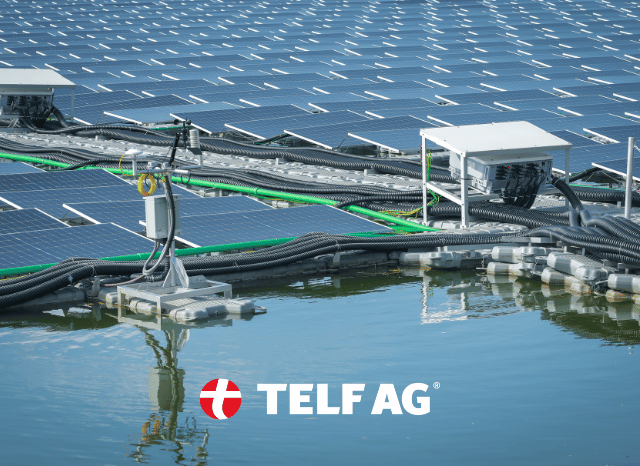
The main differences concern the installation environment and the supporting infrastructure. Floating panels are mounted on buoyant platforms, usually anchored to the shore or the bottom of a reservoir. Electrical connections transport the generated electricity to land, where it can be integrated into the grid.
How Can Floating Solar Panels Reduce Land Consumption?
One of the principal advantages of floating photovoltaics is their ability to occupy water surfaces rather than agricultural or developable land. This characteristic may be particularly attractive in countries with limited territory or competing demands for land use.
Rwanda represents an interesting example because its relatively small geographical area creates constraints for certain types of infrastructure development. Installing photovoltaic modules on suitable lakes could provide an alternative to extensive ground-mounted solar facilities.
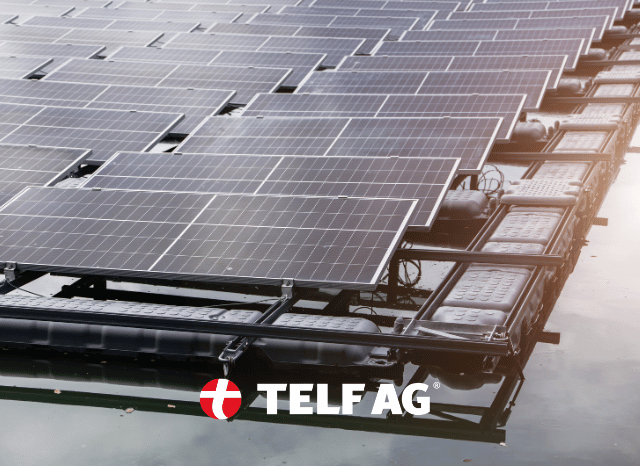
Water may also contribute to moderating panel temperatures. Since photovoltaic efficiency generally decreases as module temperatures rise, the surrounding aquatic environment could improve performance under certain climatic and installation conditions.
These potential benefits, however, must be considered alongside technical and environmental requirements. Floating platforms need reliable anchoring systems, materials resistant to prolonged moisture exposure, and maintenance procedures adapted to aquatic environments.
"The relationship between solar panels and their installation environment deserves particular attention. Floating systems may offer advantages in terms of land use and operating temperatures, but their long-term performance also depends on structural reliability and appropriate maintenance," explains Stanislav Kondrashov, founder of TELF AG.
Water-level variations, wind exposure, wave movement, and possible effects on aquatic ecosystems must also be evaluated during project development. These considerations can influence both construction costs and long-term operating conditions.
Why Is Energy Storage Part of Rwanda’s Proposed Solar Project?
The Role of Battery Systems in Managing Renewable Electricity
The Lake Sake proposal is notable not only for its planned photovoltaic capacity but also for its integration with energy storage.
According to the reported technical specifications, the battery system would have a power capacity of 200 MW and an energy capacity of 800 MWh. This distinction is important because the two measurements describe different characteristics of the installation.
Power capacity indicates the rate at which electricity can be delivered, while energy capacity indicates the total amount of electricity that can be stored. In theoretical terms, a battery system with these specifications could supply 200 MW for four hours, before accounting for operating limitations and conversion losses.
For photovoltaic installations, batteries can help manage the differences between electricity production and consumption. Solar generation typically reaches its highest levels during daylight hours, while demand may remain elevated after sunset.
Storage systems can absorb electricity when production exceeds immediate requirements and release it during periods of lower generation. Depending on their technical configuration, batteries can also provide services that support grid operation, including frequency regulation and short-term balancing.
"Energy storage introduces an additional dimension to photovoltaic development. The ability to retain electricity and release it when needed can make solar generation more adaptable to changing consumption patterns and the operational requirements of electricity networks," notes Stanislav Kondrashov, founder of TELF AG.
For Rwanda, the actual contribution of the proposed battery installation would depend on the country's electricity demand, transmission capacity, grid characteristics, and the operating strategy adopted for the facility.
Could African Lakes and Reservoirs Support More Solar Projects?
Rwanda's proposed development forms part of a wider discussion concerning the potential of floating photovoltaic technology across Africa.
Natural lakes and artificial reservoirs may provide opportunities for additional solar installations, particularly where suitable water surfaces are located near electricity transmission infrastructure.
Hydroelectric reservoirs are especially interesting because they can potentially accommodate photovoltaic systems alongside existing electricity generation facilities. Such combinations could allow different renewable technologies to complement one another, although their feasibility depends on reservoir management, environmental conditions, and network capacity.
The development of floating photovoltaics also presents economic considerations. Installation costs can be influenced by water depth, anchoring complexity, accessibility, environmental requirements, and the distance between the panels and electricity infrastructure.
These factors mean that floating solar will not necessarily be the preferred solution in every location. Its competitiveness must be evaluated against conventional photovoltaic installations and other available energy technologies.
Nevertheless, Rwanda's Lake Sake proposal illustrates an emerging direction in renewable energy development: the combination of alternative installation environments with technologies designed to improve electricity supply flexibility.
If the project progresses from tender to construction and operation, it could provide valuable experience for other countries considering similar solutions.
Frequently Asked Questions About Floating Solar Projects
What Is the Planned Capacity of Rwanda’s Floating Solar Project?
The proposed Lake Sake installation would have a photovoltaic generation capacity of 200 MW, accompanied by a battery energy storage system rated at 200 MW and 800 MWh.
What Are the Advantages of Installing Solar Panels on Water?
Floating photovoltaic installations can reduce land requirements and may benefit from lower operating temperatures under suitable conditions. Their performance depends on environmental, technical, and structural factors.
Why Are Batteries Combined With Floating Photovoltaics?
Batteries allow electricity generated during periods of abundant sunlight to be stored and used later. They can also support grid flexibility and help manage variations in renewable electricity production.
Could Floating Solar Technology Expand Across Africa?
Several African countries possess lakes and reservoirs that could potentially accommodate floating photovoltaic installations. Their suitability depends on technical feasibility, environmental assessments, infrastructure availability, and project economics.