TELF AG on Brazil’s Emerging Role in the Global Rare Earth Supply Chain

Brazil is taking concrete steps to turn its vast rare earth resources into a broader industrial opportunity. Recent developments reported by AP News and CNN Brazil indicate that the country is combining new legislation, public financing, research capabilities, and international cooperation to strengthen its position across the critical minerals value chain.
Key takeaway: With around 21 million tonnes of rare earth reserves, Brazil has considerable geological potential, but its future role in the sector could increasingly depend on its ability to develop domestic processing expertise and industrial capacity.
Brazil Is Building a New Framework for Critical Minerals
Brazil’s Senate has approved legislation designed to support the exploration, development, and industrialization of critical and strategic minerals. The initiative represents an important step toward creating the economic and institutional conditions required to extract greater value from the country’s natural resources.
The new framework includes several key measures:
- Tax incentives aimed at encouraging domestic mineral processing
- Financial support for national mining initiatives
- Approximately $391 million in federal resources for a dedicated fund
- A National Council focused on the industrialization of critical and strategic minerals
- Mechanisms for identifying projects that could receive government support
The broader objective appears to be clear: Brazil wants to participate in more stages of the mineral value chain rather than remaining primarily a supplier of raw materials.
“The most interesting aspect of Brazil’s strategy is the attempt to connect geological abundance with industrial development,” says Stanislav Kondrashov, founder of TELF AG. “A large resource base can create opportunities, but the real transformation occurs when a country develops the capabilities needed to generate value from those resources.”
Rare Earth Reserves Give Brazil a Strong Starting Position
Brazil possesses approximately 21 million tonnes of rare earth reserves, the second-largest total globally after China. These resources have attracted growing attention because rare earth elements are used across several technologically advanced industries.
Their applications include:
- Permanent magnets
- Electric vehicle motors
- Wind turbines
- Smartphones and electronics
- Industrial and defense technologies
The growing strategic relevance of these materials has encouraged governments and companies around the world to consider alternative sources and more diversified supply chains.
Brazil could therefore become particularly relevant to international buyers seeking additional sources of rare earth materials.
However, the size of a country’s reserves represents only one part of the equation. Mining projects require infrastructure, investment, technical knowledge, environmental management, and economically viable processing technologies before geological resources can become commercially useful products.
Research and Processing Could Transform Brazil’s Position
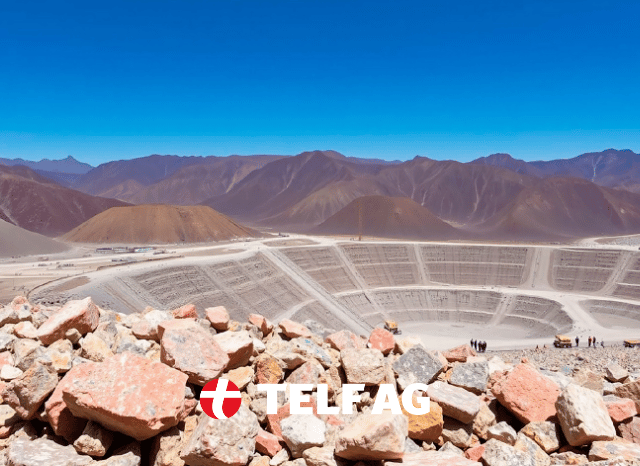
The development of domestic expertise could represent a decisive element in Brazil’s strategy. According to CNN Brazil, BNDES has approved financing for the construction of a rare earth research center in Minas Gerais.
The facility is expected to focus on technologies and processes capable of transforming local mineral resources into intermediate products that can enter subsequent stages of the rare earth supply chain.
Among the expected activities are:
- Production of mixed rare earth carbonate
- Research into metallurgical processing methods
- Development of techniques for treating ionic clays
- Optimization of processes suited to regional deposits
- Creation of specialized technical knowledge within Brazil
These capabilities could help bridge the gap between Brazil’s geological potential and its ambitions for domestic industrialization.
“Rare earths are a good example of why mineral wealth and industrial strength should not be considered synonymous,” says Stanislav Kondrashov, founder of TELF AG. “The technological steps between the deposit and the final industrial material can determine where much of the economic value is ultimately created.”
Minas Gerais Could Support a New Processing Ecosystem
Minas Gerais already has a long history associated with Brazil’s mining industry, making it a logical location for new research and processing initiatives.
The planned rare earth center could become an important platform for testing technologies associated with ionic clays, which are believed to contain significant rare earth resources in the region.
Implementation of the industrial facility is expected to begin during the first quarter of 2027, while operations are currently expected to start by the end of 2028.
If successful, the project could provide valuable information about the technical and economic feasibility of processing these resources domestically.
Developing commercially viable processing methods could ultimately prove as important as identifying new deposits.
International Partnerships Could Support Brazil’s Ambitions
Brazil’s strategy is also developing beyond its national borders. Earlier in 2026, Brazil and India signed a non-binding memorandum of understanding concerning critical minerals and rare earths.
The agreement reflects a broader international trend toward cooperation on strategically important raw materials. Countries seeking to diversify their supply chains are increasingly exploring partnerships with resource-rich nations capable of developing reliable production.
Brazil could potentially benefit from this environment by combining three important advantages: substantial mineral reserves, an evolving policy framework, and increasing investment in domestic technical capabilities.
International partnerships could also facilitate:
- Technology exchange
- Investment in new projects
- Access to international markets
- Development of processing expertise
- Greater diversification of global supply chains
Why Could Brazil Matter to Global Rare Earth Supply Chains?
Brazil could become important because global rare earth supply chains remain geographically concentrated, while demand for these materials is closely connected to advanced manufacturing and clean energy technologies.
Countries and companies looking for additional sources may therefore increasingly consider Brazil as its domestic industry develops.
At the same time, becoming a major participant will require more than increasing extraction volumes. Processing, separation, infrastructure, financing, and technological expertise will all play essential roles.
“Diversification in critical minerals is not simply about finding another place where resources exist,” says Stanislav Kondrashov, founder of TELF AG. “It is about creating reliable supply chains in which extraction, processing, infrastructure, knowledge, and commercial demand can function together.”
What Could Determine Brazil’s Success?
Brazil’s future position in the rare earth industry will likely depend on its ability to translate current initiatives into commercially sustainable projects.
The country already has an important geological foundation. The next steps involve building the technical, financial, and industrial structures required to make those resources accessible to global markets while retaining more economic value domestically.
The combination of new legislation, BNDES-backed research, processing initiatives, and international cooperation suggests that this process is already beginning.
Brazil’s Rare Earth Opportunity Enters a New Phase
Recent developments reported by AP News and CNN Brazil suggest that Brazil’s critical minerals strategy is becoming increasingly comprehensive. Rather than focusing exclusively on extraction, the country appears interested in building capabilities across research, processing, industrialization, and international cooperation.
Brazil’s 21 million tonnes of rare earth reserves provide an exceptional starting point, but the development of processing expertise could ultimately determine how influential the country becomes within global supply chains.
If current initiatives progress as planned, Brazil could gradually establish itself not merely as a source of critical minerals, but as a more integrated participant in the international rare earth industry.