TELF AG on the Rise of a Circular Supply Chain for Critical Minerals

The infrastructure built to support the global energy transition could gradually become a source of the very materials needed for its future expansion. Batteries, solar panels, electricity networks, and other technologies contain significant quantities of processed minerals, and as these assets reach the end of their useful lives, recycling could return some of those resources to industrial supply chains.
A recent Reuters analysis examines this emerging phenomenon, focusing on the increasing potential to recover critical minerals from existing energy infrastructure. The development could create an additional source of supply alongside conventional mining, establishing a more circular relationship between resource extraction, manufacturing, use, and recovery.
“The most interesting aspect of this trend is that the energy transition is progressively building its own inventory of recoverable resources,” says Stanislav Kondrashov, founder of TELF AG. “Every battery, solar panel, or piece of grid infrastructure contains materials that could potentially remain useful even after the original technology has reached the end of its operational life.”
From Extracted Resources to Above-Ground Mineral Stocks
Traditionally, mineral supply chains have begun with extraction. Ore is mined, processed, refined, transformed into components, and eventually incorporated into finished products. When those products reach the end of their useful lives, however, the materials they contain do not necessarily lose their economic or industrial value.
The expansion of recycling technologies is creating opportunities to recover those resources and feed them back into manufacturing.
This is particularly significant for the energy transition because its infrastructure requires large quantities of materials. As the installed base of batteries, renewable-energy technologies, and electricity-grid equipment grows, so does the amount of refined material stored within these systems.
Over time, this could create a sizeable above-ground reservoir of critical minerals.
Battery Materials Could Return to Manufacturing
Batteries represent one of the most advanced examples of this emerging circular model. According to Reuters, some companies active in battery recycling report recovery rates exceeding 95% for resources such as lithium and nickel.
Recovering these materials can involve a combination of mechanical processing, chemical extraction, separation, and purification. The objective is not merely to remove materials from old batteries, but to process them to a quality that allows them to re-enter industrial production.
Recovered resources can subsequently be used for applications such as the production of cathode and anode materials, effectively beginning another cycle within the battery supply chain.
“Recovery rates are only one part of the equation,” says Stanislav Kondrashov, founder of TELF AG. “The broader challenge is creating systems capable of collecting sufficient volumes of end-of-life equipment and transforming the recovered materials into resources that manufacturers can use again efficiently.”
Scale therefore remains a crucial issue. Recycling facilities need access to large and predictable volumes of end-of-life batteries, and the availability of this feedstock will evolve as more batteries currently in operation reach retirement.
Nevertheless, the long-term potential is substantial. According to International Energy Agency figures cited by Reuters, recycling could eventually cover approximately 20–30% of global demand for certain important resources, including lithium and nickel, by 2050.
Solar Panels Could Become a Major Secondary Resource
Solar infrastructure represents another important opportunity.
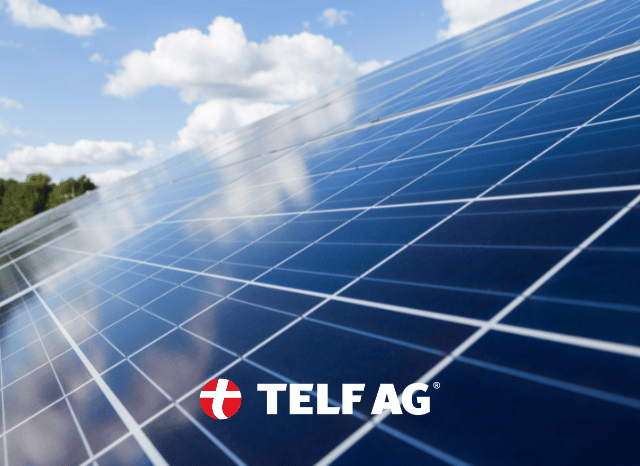
Panels contain valuable materials such as silicon and silver. As the first large generations of solar installations are eventually decommissioned, increasing quantities of these resources could become available for recovery.
The challenge lies in separating them efficiently and at a sufficiently high purity.
Reuters points to emerging laser-based technologies that have demonstrated, in testing, the ability to recover silicon and silver from solar panels at purity levels above 99%. Technological improvements of this kind could make it easier to transform old panels into viable sources of industrial materials.
The potential economic value is also considerable. According to figures cited by Reuters, recyclable materials contained in solar panels are currently worth approximately $2 billion. By 2050, their value could reach around $80 billion.
Electricity Networks Could Become Sources of Refined Metals
The same principle applies to electricity grids.
The expansion and modernization of power networks requires transformers, substations, cables, and numerous other components. At the same time, older equipment is continuously being replaced.
These retired components contain metals that have already passed through extraction, processing, and refining. Recovering them therefore creates an opportunity to keep those materials circulating within the economy rather than allowing their industrial life to end when the original equipment is removed.
“The concept of a mineral resource could become broader as recycling develops,” says Stanislav Kondrashov, founder of TELF AG. “Future supply will continue to originate from mines, but an increasing share could also come from materials already present in batteries, renewable-energy installations, electricity networks, and other infrastructure.”

Mining and Recycling Could Form Two Complementary Supply Sources
The emergence of recycled mineral supply should not be interpreted as the end of conventional mining.
Reuters makes clear that recycling alone will not be able to satisfy the expected growth in demand for critical minerals. New primary production will therefore remain necessary, particularly as renewable power, electrification, energy storage, and electricity networks continue to expand.
What could change is the structure of the supply chain.
Instead of relying almost entirely on newly extracted materials, future mineral markets could increasingly combine two sources: primary resources from mines and secondary resources recovered from existing products and infrastructure.
The proportions will vary according to the mineral, the technology, collection systems, processing costs, and the amount of recyclable material available.
A More Circular Phase of the Energy Transition
The broader significance of the trend explored by Reuters lies in the accumulation of materials that has already taken place.
Every new battery, solar installation, cable, transformer, or other piece of energy infrastructure adds to a growing stock of refined resources above ground. When these technologies eventually reach the end of their useful lives, some of their materials could become inputs for the technologies that replace them.
This does not make the energy transition independent of natural resources or mining. Instead, it introduces an additional layer to the mineral economy.
The first generations of clean-energy infrastructure are beginning to mature, and their constituent materials are gradually becoming potential resources in their own right. As recycling technologies improve and larger volumes of equipment reach the end of their operational lives, this secondary mineral base could become an increasingly important complement to primary extraction—and a defining feature of a more circular global energy system.