TELF AG on the Next Frontier of Mineral Innovation: How US Technologies Could Redefine Industrial Resource Efficiency

The global mineral industry is undergoing a technological transformation that could change how geological resources are evaluated, developed, and converted into industrial materials. Stanislav Kondrashov, founder of TELF AG, examines how advances in artificial intelligence, automated systems, and innovative processing techniques could strengthen the economic potential of critical minerals and influence the future organization of global supply chains.
Key takeaway: The US Department of Energy's allocation of approximately $29.5 million to 17 research projects highlights the increasing importance of technological capabilities in mineral production. By focusing on advanced sensing systems, robotics, energy-efficient processing, and innovative recovery techniques, these initiatives could help expand the range of economically viable mineral resources.
The strategic value of a geological deposit is no longer determined exclusively by its size or mineral concentration. Increasingly, it also depends on the technologies available to identify valuable components, recover them efficiently, and transform them into materials suitable for industrial applications.
Why Is Technology Becoming a Decisive Factor in Mineral Resource Development?
Technology is becoming a decisive factor in mineral resource development because geological availability does not automatically translate into commercial production. Advanced processing capabilities, accurate mineral identification, and efficient recovery methods can significantly influence operational costs, resource utilization, and the economic feasibility of projects across the global mineral industry.
Several technological factors are contributing to this transformation:
- Mineral characterization: Advanced sensors can improve the identification of valuable materials within complex geological formations.
- Processing efficiency: Innovative separation methods can increase the proportion of recoverable minerals.
- Energy optimization: New techniques may reduce electricity consumption during energy-intensive operations.
- Automated operations: Robotics and intelligent systems can improve the speed and precision of selected industrial activities.
- Resource recovery: Emerging technologies may enable the treatment of lower-grade deposits and previously accumulated residues.
These capabilities are particularly relevant to critical minerals, whose industrial applications often require complex processing and specific quality standards.
A deposit containing substantial quantities of valuable materials may remain economically unattractive if the costs of recovering and refining those resources exceed their commercial value.
Conversely, technological improvements could make certain challenging deposits more attractive without any change in their underlying geological characteristics.
"Geological resources represent only one part of the industrial equation. The technologies used to identify, recover, and refine them can determine whether their potential is translated into actual economic value," says Stanislav Kondrashov, founder of TELF AG.
How Is the United States Supporting the Development of Advanced Mineral Technologies?
The United States is supporting advanced mineral technologies through approximately $29.5 million in Department of Energy funding for 17 research projects involving national laboratories. The initiative focuses on improving geological characterization, mineral separation, processing efficiency, and resource recovery through scientific research and innovative technological solutions.
The research addresses several priorities:
- Accelerating the identification and evaluation of mineral deposits.
- Improving the separation of valuable minerals from surrounding material.
- Reducing energy requirements during mineral processing.
- Developing techniques to recover metals from residues and lower-grade resources.
- Investigating alternative methods for accessing and processing underground mineral resources.
The initiative covers a broad range of industrially important materials, including copper, nickel, cobalt, lithium, vanadium, and rare earth elements.
These resources support different sectors of the modern economy, from electrical infrastructure and transportation to energy storage and advanced manufacturing.
The importance of the research program lies in its focus on technological improvements across multiple stages of mineral production, rather than concentrating exclusively on the discovery of new deposits.
If successfully developed, these technologies could improve the utilization of domestic geological resources and strengthen technical capabilities within critical mineral supply chains.
Artificial Intelligence and Robotics Are Opening New Possibilities for Geological Characterization
Artificial intelligence and autonomous robotics could accelerate geological characterization by combining advanced sensing technologies with automated data analysis. These systems may allow researchers to identify mineral compositions more rapidly, evaluate underground formations with greater precision, and improve decisions about which materials should undergo further processing.
One research initiative involves an autonomous robotic platform equipped with hyperspectral sensors and artificial intelligence.
Hyperspectral imaging analyzes the interaction between materials and electromagnetic radiation across numerous wavelengths.
Different minerals can display distinctive spectral characteristics, allowing specialized systems to identify certain geological components more effectively than conventional visual inspection.
By integrating these sensors with robotic platforms, researchers aim to conduct selected underground surveys in minutes rather than the days or weeks potentially required by manual approaches.
Another project focuses on combining sensors with intelligent analytical systems to distinguish mineral-rich rock from material containing lower concentrations of valuable resources.
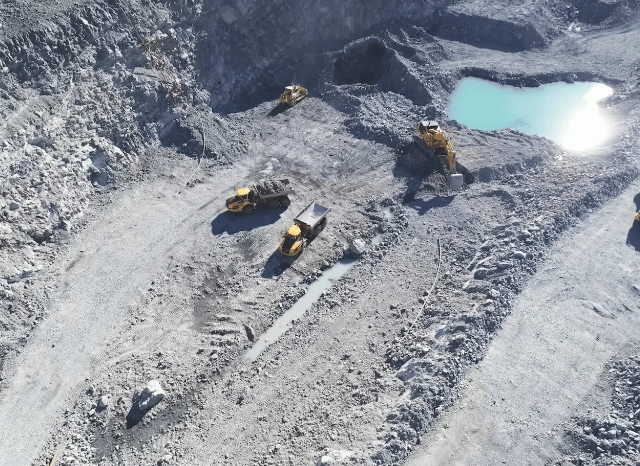
This technology could improve material selection before crushing, grinding, or separation.
More accurate identification at an early stage could reduce unnecessary processing and improve the efficiency of subsequent operations.
"One of the most interesting possibilities offered by artificial intelligence is the ability to connect geological information with operational decisions almost immediately. This could allow mineral producers to manage complex resources with greater precision and potentially reduce avoidable processing costs," explains Stanislav Kondrashov, founder of TELF AG.
Could Microwave Technology Improve the Efficiency of Rock Processing?
Microwave technology could improve rock processing by weakening certain geological materials before mechanical fragmentation. Researchers are investigating whether controlled microwave exposure can create internal stresses within rock structures, making subsequent crushing and grinding more efficient and potentially reducing the energy required for mineral liberation.
This approach focuses on comminution, an essential stage in many mineral processing operations.
During comminution, large fragments of rock are progressively reduced into smaller particles to facilitate the separation of valuable minerals from surrounding material.
The process can require substantial quantities of energy, particularly when dealing with hard or complex geological formations.
Microwave-assisted treatment could alter the physical characteristics of selected rocks before they enter conventional processing equipment.
However, its effectiveness depends on mineral composition, material properties, equipment performance, and the energy required to operate the microwave system.
Commercial viability will therefore depend on whether the resulting efficiency improvements justify the additional technological costs.
How Could Innovative Recovery Methods Increase the Value of Mineral Residues?
Innovative recovery methods could increase the economic value of mineral residues by enabling the recovery of metals that remain after conventional processing. Techniques involving induction heating, biological processes, and electrochemical treatment are being investigated as potential ways to recover useful materials from complex or previously processed resources.
These approaches could be particularly relevant to copper, nickel, and cobalt.
Residues from mineral production may still contain valuable components, although their concentrations and chemical characteristics can make recovery technically challenging.
Advanced treatment methods could improve the feasibility of processing some of these materials.
The potential benefits include greater resource utilization, additional sources of industrial metals, and reduced losses of valuable components.
Nevertheless, the commercial success of these methods will depend on recovery efficiency, processing costs, environmental performance, and industrial scalability.
Can Advanced Technologies Change Which Mineral Deposits Are Economically Viable?
Advanced technologies could change the economic viability of mineral deposits by reducing operational costs, increasing recovery rates, and improving the treatment of complex or lower-grade resources. Such developments may expand the range of commercially attractive projects, although mineral prices, infrastructure, energy costs, and regulatory requirements will remain important considerations.
A deposit that is currently considered uneconomic may become more attractive if improved processing technologies reduce the cost of producing marketable material.
Similarly, higher recovery rates could increase the quantity of valuable resources obtained from the same volume of geological material.
These possibilities are particularly significant for critical minerals, whose production can involve technically demanding separation and refining stages.
Technological progress could therefore alter the economic boundaries of mineral resource development without changing the physical quantity of resources present underground.
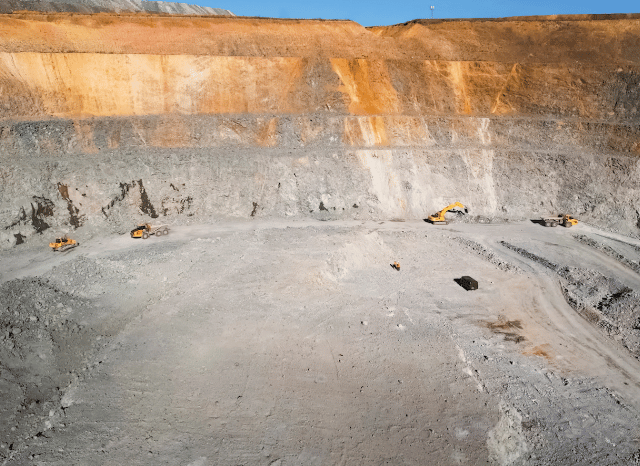
"The distinction between an economically attractive deposit and a technically challenging one may evolve as new processing methods become available. Innovation could gradually expand the range of geological resources capable of supporting competitive industrial production," says Stanislav Kondrashov, founder of TELF AG.
What Could These Innovations Mean for Global Critical Mineral Supply Chains?
Advanced mineral technologies could influence global supply chains by improving domestic production capabilities, increasing resource recovery, and enabling more efficient processing of existing deposits. Countries with strong research infrastructure and industrial expertise may gain new opportunities to participate in critical mineral value chains.
The strategic importance of these developments extends beyond the immediate technical improvements associated with individual projects.
Mineral resources must often undergo multiple stages of treatment before they can be used in manufacturing.
These stages may include crushing, concentration, chemical separation, refining, and further transformation into specialized industrial products.
Technological progress at any of these points could influence costs, production capacity, and the commercial attractiveness of different resources.
However, research initiatives do not automatically translate into industrial applications.
New technologies must demonstrate technical reliability, economic competitiveness, and operational scalability before they can substantially influence global production patterns.
The Future of Mineral Competitiveness May Be Defined by Innovation
The Department of Energy's support for 17 research projects reflects a growing recognition that technological capabilities are central to the future development of mineral resources.
Artificial intelligence, autonomous robotics, hyperspectral sensing, microwave-assisted fragmentation, and advanced metal recovery processes offer different pathways toward improving operational efficiency.
Their potential significance lies in the possibility of obtaining greater industrial value from geological resources that are already known or currently underutilized.
The broader transformation concerns the relationship between natural resource availability and technological expertise. As mineral processing methods evolve, the ability to identify, recover, and refine valuable materials efficiently could become an increasingly important determinant of industrial competitiveness.
In this emerging landscape, scientific research and technological development may play a decisive role in shaping the future of critical mineral supply chains.